
Crafting an Intriguing Antagonist for Your Short Screenplay
by Matthew R. Paden
Sunday, September 24th 2026

Crafting an Intriguing Antagonist for Your Short Screenplay
A short screenplay has no room for a weak antagonist. In 5, 10, or 20 pages, every character must earn their place, and the antagonist carries one of the heaviest loads.
This character creates pressure, reveals the protagonist’s flaws, and turns a simple situation into a story.
Many shorts fail because the antagonist is treated as a “bad guy” or a plot device. They arrive, block the hero, and leave. The result is conflict without weight. A better antagonist does more than oppose. They believe in something. They want something specific.
They force the protagonist to make choices that expose who they are.
That principle goes back to the foundations of drama. Aristotle’s Poetics describes plot as a sequence of actions driven by cause and effect. In screenwriting terms, that means conflict must come from desire, pressure, and consequence. A well-developed antagonist gives those forces a human shape.
For short films, the challenge is sharper. There is less time for exposition, fewer scenes to establish psychology, and often a smaller cast. The antagonist must feel complete quickly.
That does not mean adding a long monologue about childhood trauma. It means choosing details that imply a larger life.
A strong antagonist makes the protagonist more interesting

The antagonist’s first job is not to be evil. Their job is to test the protagonist. In Whiplash, Fletcher is terrifying because he attacks Andrew’s deepest need, the desire to be great.
Fletcher does not simply yell. He represents a brutal theory of excellence, one built on humiliation, pressure, and emotional manipulation. Whether the film agrees with him is part of its tension.
Andrew becomes more compelling because Fletcher forces him to reveal how far he will go.
That is the key lesson for short screenplays. The antagonist should target the protagonist’s central wound, fear, or desire. If the hero wants approval, create an antagonist who can withhold it.
If the hero avoids conflict, create an antagonist who corners them. If the hero lies to stay safe, create an antagonist who makes the truth costly.
A useful test:
What does the protagonist want on the surface?
What do they need on a deeper level?
How can the antagonist block both at once?
What choice will the antagonist force by the end?
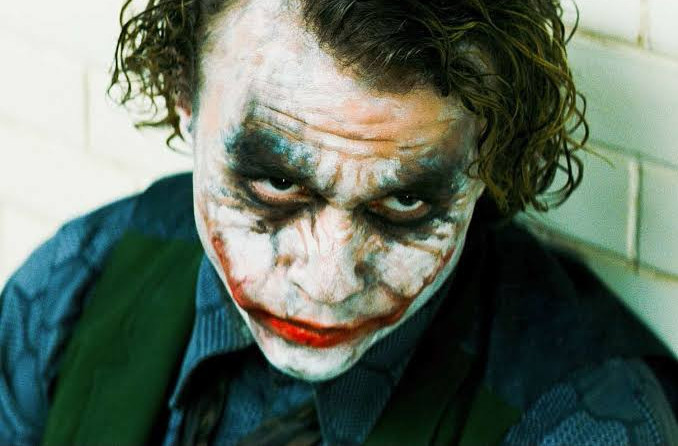
In The Dark Knight, the Joker works so well because he is not only trying to create chaos. He is testing Batman’s moral code. He wants to prove that people, including heroes, abandon their values under enough pressure. The conflict is physical, but the real battle is philosophical.
Short scripts can use the same principle at a smaller scale. A landlord, parent, rival musician, police officer, teacher, sibling, or best friend can serve as an antagonist if their actions challenge the protagonist’s core belief.
An antagonist becomes memorable when they threaten the protagonist’s identity, not just their plans.
Give the antagonist a backstory that shows up in behavior
Backstory matters, but short films rarely have space to explain it directly. The better approach is to let the audience feel the backstory through behavior, language, habits, and choices.
A compelling backstory answers three practical questions:
What shaped this person’s worldview?
What do they believe they are protecting?
What line will they cross because of that belief?
The audience does not need every detail. They need enough evidence to sense that the antagonist existed before the story began.

Anton Chigurh in No Country for Old Men offers a strong example. The film does not pause to explain his childhood or psychology. Instead, his code emerges through action.
The coin toss scenes show a worldview built around fate, control, and ritual. His calm manner makes him more unsettling than a louder villain would be. The backstory remains mostly hidden, but the behavior feels consistent.
In a short screenplay, that kind of restraint helps. Instead of giving the antagonist a speech about why they distrust people, show them checking the lock three times before letting someone in.
Instead of explaining that they were betrayed, show how quickly they punish disloyalty. Instead of stating that they feel powerless, show them controlling a small space with extreme precision.
Try building the backstory in layers:
Public identity
How they want others to see them.
Private wound
The hurt, fear, or shame they rarely reveal.
Protective belief
The rule they live by because of that wound.
Harmful method
The way they pursue safety, power, love, justice, or respect at someone else’s expense.
For example, an antagonist in a 12-page drama might be a mother who blocks her adult child from leaving home. A thin version would make her controlling for no reason.
A stronger version suggests she lost someone before, believes departure equals abandonment, and uses guilt as her method of control. The short does not need flashbacks. One unfinished bedroom, one avoided phone call, and one line about “what happened last time” can imply enough.
Backstory should not excuse the antagonist’s harm.
It should make the harm understandable in dramatic terms. That distinction matters. Viewers do not need to approve of the antagonist. They need to understand why this person acts with such force.
Build motivations that are specific, active, and personal
A vague antagonist wants “power,” “revenge,” or “control.” A compelling antagonist wants something concrete by a specific point in the story.
In a short screenplay, motivation must be especially clear because the audience has little time to orient themselves. The antagonist’s want should be visible in action.
Compare these two versions:
Weak motivation | Stronger motivation |
A boss wants control. | A restaurant owner wants to stop a server from reporting wage theft before the dinner rush ends. |
A neighbor is cruel. | A neighbor wants to get a family evicted before a property inspection on Friday. |
A sister is jealous. | A sister wants to prevent her brother from selling their late father’s guitar. |
A coach is abusive. | A coach wants a runner to compete while injured to win a regional title. |
Specificity creates pressure. It also gives the character tactics.
The antagonist should actively pursue their goal. They should adapt when blocked. This is one reason Hans Gruber in Die Hard remains such a useful screenwriting example. He is not random.
He has a plan, he changes tactics, and he uses charm, violence, deception, and patience depending on the obstacle in front of him. He is dangerous because he thinks.
For shorts, give the antagonist at least three tactical shifts. Even in a brief film, the pattern can be simple:
They ask politely.
They apply pressure.
They reveal the cost of refusal.
That escalation gives the story shape. It also keeps the antagonist from feeling one-note.
Motivation also becomes stronger when the antagonist can justify it.

Few people see themselves as the villain of their own life. Nurse Ratched in One Flew Over the Cuckoo’s Nest does not behave like someone who believes she is causing harm for fun. She embodies institutional control, order, and obedience. T
hat makes her frightening because her cruelty hides behind procedure.
When writing motivations, ask:
What does the antagonist tell themselves they are doing?
Who benefits if they succeed?
Who gets hurt if they succeed?
What are they afraid will happen if they fail?
This is one of the core habits of Writing Compelling Characters. Motivation is not decoration. It is the engine that turns scenes into conflict.
Give the antagonist traits that cannot be swapped out
A memorable antagonist has a signature. That signature might be a voice, rhythm, ritual, contradiction, moral code, physical habit, or social mask. The goal is not to add quirks for flavor.
The goal is to make the character feel specific enough that no other antagonist could replace them.
Think of Annie Wilkes in Misery. Her politeness, fandom, sudden rage, and moral language create a deeply specific threat. The danger does not come only from captivity. It comes from the way she frames violence as care, correction, or devotion.

Or consider Miranda Priestly in The Devil Wears Prada. She is not a physical threat, but her quiet voice, precise standards, and ability to reshape a room with a look make her powerful.
Her uniqueness comes from restraint. The film understands that intimidation does not always require volume.
For a short screenplay, choose one or two defining traits and use them consistently.
Strong traits often come from contrast:
A warm voice paired with ruthless action
A generous public persona paired with private cruelty
A strict moral code paired with selective blindness
A comic habit paired with real danger
A soft-spoken style paired with absolute control
The contrast creates intrigue because the audience has to keep watching to understand the whole person.
A good trait should also influence scene behavior. If the antagonist is ritualistic, their tactics may involve rules and tests. If they are charming, they may isolate the protagonist socially before attacking.
If they are impatient, they may make mistakes under pressure. If they are proud, they may refuse an easy compromise.
Avoid traits that exist only as decoration. A scar, accent, unusual hobby, or costume choice means little unless it connects to action, theme, or power. The best traits affect how the antagonist pursues their goal.
Balance the antagonist with the protagonist’s journey
A short screenplay can tilt too far in either direction. If the antagonist dominates every scene, the protagonist becomes passive. If the antagonist is too weak, the protagonist’s growth feels unearned.
Balance comes from designing the antagonist as a pressure system around the protagonist’s arc.
The protagonist should change, or fail to change, because of the antagonist’s pressure. That means each major encounter should force a new decision.
The antagonist should not repeat the same move in every scene.
A simple structure works well:
Story beat | Antagonist function | Protagonist effect |
Opening | Interrupts the protagonist’s normal pattern | Reveals what the protagonist wants or avoids |
Middle | Raises the cost of resistance | Forces the protagonist to use flawed tactics |
Crisis | Attacks the protagonist’s deepest fear or need | Creates a defining choice |
Ending | Faces the result of the protagonist’s decision | Confirms change, defeat, or moral cost |
In Get Out, the antagonistic force is not just one person. It is a family system, a social performance, and a hidden industry of exploitation. Chris’s journey works because each antagonist interaction tightens the trap while revealing more truth. The polite surface is part of the horror.
The antagonists force Chris to trust his perception and act.
This is useful for short films because the antagonist does not have to be a single mustache-twirling figure.
It can be a person who represents a larger force, such as family expectation, class pressure, racism, artistic gatekeeping, bureaucracy, or grief. Still, the conflict usually plays best when that force has a human face.
Balance also requires giving the protagonist agency. The antagonist can be powerful, but the protagonist must make meaningful choices. If the antagonist simply abuses, chases, or lectures while the protagonist reacts, the story becomes flat. Let the protagonist try things.
Let those attempts fail for character-based reasons. Then let the final choice reveal growth or tragedy.
A short antagonist should also serve the film’s theme. If the story asks whether ambition is worth personal cost, the antagonist might embody success without compassion. If the story asks whether forgiveness is possible, the antagonist might challenge the protagonist’s idea of justice.
If the story asks whether silence protects a family, the antagonist might profit from that silence.
This is the practical heart of How To Write An Intriguing Antagonist for Your Short Screenplay.
Do not create the antagonist separately from the hero. Build them as opposing answers to the same dramatic question.
Use film examples as craft lessons, not templates
Successful films can teach antagonist design, but copying the surface usually leads to weak work. The task is to identify the craft principle under the performance, genre, or plot.
Here are several useful lessons:
Film | Antagonist lesson | How to apply it in a short |
Whiplash | The antagonist attacks the protagonist’s deepest desire. | Make the opponent the gatekeeper to what the hero wants most. |
The Dark Knight | A strong antagonist tests the hero’s moral code. | Build conflict around values, not only events. |
Misery | Specific behavior makes danger personal. | Give the antagonist a pattern of speech, care, or punishment. |
No Country for Old Men | Mystery can strengthen menace when behavior is consistent. | Suggest backstory through rules and rituals instead of exposition. |
Get Out | A polite surface can hide violent intent. | Use social performance as a source of tension. |
Die Hard | Intelligence and adaptability make an antagonist active. | Let the opponent change tactics when the hero resists. |
The strongest takeaway from these examples is that antagonists are not interchangeable. Fletcher could not simply replace Hans Gruber. Annie Wilkes could not simply replace the Joker. Each is built for a specific protagonist, world, and theme.
That should be the standard for a short screenplay too. If the antagonist could be swapped with a generic bully, criminal, parent, or monster without changing the story, the character is not yet specific enough.
A practical checklist for your short screenplay antagonist
Before drafting, or during revision, run the antagonist through these questions.
Desire
What does the antagonist want by the end of the film?
Pressure
How do they make the protagonist’s life harder in visible, escalating ways?
Belief
What do they believe that makes their behavior feel justified to them?
Backstory
What past experience shaped that belief, and how can it appear through action instead of explanation?
Trait
What makes them specific on the page, in performance, and on screen?
Tactics
How do they adjust when the protagonist resists?
Connection
Why is this antagonist the right opponent for this protagonist?
Theme
What idea does the antagonist embody or challenge?
Limit
Where is the line they will not cross, or where is the line they cross that reveals who they truly are?
Ending
How does the final encounter with the antagonist prove the protagonist has changed, failed, or paid a price?
These questions help keep character work tied to screen action. A screenplay is not a character biography. The audience understands character through choices under pressure.
Make the antagonist unforgettable in fewer scenes
Short films demand compression. That can work in the antagonist’s favor. A single strong entrance, one revealing choice, and one sharp reversal can define a character faster than pages of background.
Start with the moment of maximum usefulness. Introduce the antagonist doing something that shows how they operate. If they are manipulative, let them win someone over while harming someone else.
If they are controlling, let them turn a normal situation into a test. If they are dangerous, let the danger appear before anyone names it.
Then cut any line that only explains what the audience can already infer.
Replace general villain dialogue with specific pressure. Instead of “You’ll regret crossing me,” try a line that reveals knowledge, intimacy, or power. For example, “Your landlord still thinks you live alone.” The threat becomes personal, and the scene gains story value.
Finally, give the antagonist a point of vulnerability. This does not have to make them sympathetic. It makes them dramatic. Pride, loneliness, fear of irrelevance, grief, envy, or shame can create cracks in the surface. Those cracks give actors something to play and directors something to frame.
When crafting an intriguing antagonist for your short screenplay, a great antagonist does not need maximum screen time. They need maximum impact. Build them with desire, pressure, contradiction, and purpose.
Let their backstory shape behavior. Let their motivation create action. Let their traits affect tactics. Most of all, let them force the protagonist into the choice the story was built to ask.
When the antagonist is written with that level of care, the short film feels larger than its runtime. The conflict sharpens. The protagonist deepens. The ending lands with more force because the opposition mattered.


